Friday, November 27, 2015

Liberty Paints

Our narrator gets his first job at Liberty Paints- a company full of great patriotism. The name of the company emphasizes “liberty” for all- ironic due to the fact that America was severely divided.
The first thing the narrator learns is how to mix their famous “pure” white paint: by adding ten drops of black toner into each mixture. “Now measure ten drops into the paint…There, that's it, not too goddam fast. Now. You want no more than ten, and no less,” Kimbo instructs him (200). Although he is adding black drops, the paint still dries a clear white color.

            After looking deeper, I realized that these black dots in the midst of the white paint are a symbol for the black/white relations of America. The Liberty Paints serves as an extended metaphor of racial inequality. The factory’s slogans emphasize the moral superiority of their whiteness. It is demonstrating the underrated black contribution to America. Without it, America would not be the same. This connects to the poem “Theme for English B” where Hughes explains to his teacher that at the end of the day, no matter what race, everyone is American. He says, “You are white- yet a part of me, as I am a part of you”. However, this is a viewpoint that many whites of America refuse to accept. 

Pressure for Forgiveness

 The pressure to apologize for the actions of others within the narrator's racial group is a constant internal issue he faces. Embarrassment and shame for actions that don't even directly affect him as a person, but he deems a shame to black people as a whole. At first, when Trueblood explains his incestual dilemma, the narrator pushes to leave and continues to question "how can he tell this to white men..." (58). The narrator feels responsible in apologizing for any image single people/groups display for his race as a whole, emphasizing that present theme of internalized racism.
  As Mr. Norton falls ill to the heat and shock of Trueblood's story, and is taken to Golden Day where chaos and violence uproars through the misconstrued veterans, the narrator feels another presence of pressure to redeem his personal image as a result of the actions of others. Yet again, when the veteran Doctor is asked to explain his backstory by Mr. Norton, the narrator urges to leave. Questioning once again "...why would the vets act that way with a white man in the house?" (98) and continuing in thoughts to plead for forgiveness to Mr. Norton. The spiel that plays out in his head displays self-hate and incrimination for reasons he has no control over. "I wanted to...beg his pardon for what he had seen; to plead and show him years...to assure him that...I hated them, that I believed in the principles of the founder..." (99) are only some of the constructed ideas he plans to use in pardoning a new stereotype or view of himself and others of his race. The shame and guilt he knows will come from the whites, pressures him and pushes him to break down in tears and apology for no relevant reason.
http://www.baltimoresun.com/news/maryland/crime/blog/bs-md-ci-batts-speaks-to-fop-20150527-story.html
(link describing officer apologizing for the riots in Baltimore, calling people protesting and rioting for the silencing of black people's rights and freedoms just as the narrator apologizes for the veterans rowdiness against their corrupt attendant)

Blog Post #3 Invisibility

In the crazy and somewhat comedic scene at the Golden Day, an ex-doctor and vet takes care of Mr. Norton as he passes out many times. The vet tells the narrator and Mr. Norton some insightful and maybe insulting things. He says the narrator is a “mechanical man (94).” Prior to that the vet says the narrator does not truly understand anything. Later he explicates the reality of Mr. Norton and the narrator and states they do not see each other for who they are for but for what they want. Mr. Norton only sees invisible man as his destiny and accomplishment and invisible man only sees Mr. Norton as someone more powerful. Neither of them see the other as a person.

Image result for invisible man ralph ellison
                The vet says earlier about the invisible man: “Already he’s learned to repress not only his emotions but his humanity. He’s invisible, a walking personification of the Negative, the most perfect achievement of your dreams, sir! (94)” This portrays the narrator as his grandfather’s last words. The narrator succumbs to the white man and will do anything to be seen as important in the white man’s eyes. The emotion is gone and so is the humanity. The narrator gives himself up and becomes Mr. Norton’s destiny of a successful school. As mentioned earlier the vet then says “The mechanical man! (94)” This phrase expands on the idea of succumbing to a power because it’s like saying the narrator is just following any orders given just so he can impress. Therefore the narrator may not see Mr. Norton as a person but just as a higher power he must take care of to be well-regarded. The vet is also saying Mr. Norton just sees the narrator as another achievement. 
Through Blesdoe's monologues in Chapter 6, we notice more and more that the invisible man is very naive. He continually gives everyone the benefit of the doubt and he makes decisions with good intentions, however inevitably gets himself into trouble. The invisible man is easy manipulated unlike in the prologue where he is very cynical. He convinces himself that he deserves to be expelled from school and decides to make it up to the school as fast as he can. Chapter 8 proves his innocence further as he is overly optimistic when he delivers the letters asking for him to be hired. New York is so densely populated with thousands of people looking for jobs and he expects to be hired in the blink of an eye. He even trusts the man that expelled him to get him the job. Although this is very naive it reminds me of Frank Sinatra's song "New York New York" when he sings, "If I can make it there, I'll make it anywhere."
Mr. Blesdoe reveals to us also in Chapter 6 the chain of who's in control during this time period. "This is a power set up, son..." (142). He proceeds to tell the narrator of how he plays the white folk by "[acting] the nigger" (143) to get to the right hand of the white man- or the puppeteer position that controls the right hand. He distorts the Founder's dream of lifting the veil of ignorance and rather than enlightening students and providing them with an education that prepares them to be educated adults in the real world, Blesdoe shoves them further down in society by perpetuating the myth of white supremacy. Therefor, this chapter is the start of the invisible man's invisibility. "You're nobody, son. You don't exist- can't you see that?" (143). Ralph's imagery and diction confirm this: "followed in their shadows" (136), "He called me that" (139), "out of the fire and into the melting pot" (152).

Blog Post #3

Mary Rambo offers to aid the narrator back to health after he is clearly mistreated at the hospital. Mary represents the biblical Virgin Mary; she is a kind motherly figure. Even though Mary Rambo lives in a corrupted world where blacks are suppressed and deprived of their dignity, she still has the moral of helping those who need it. Mary “never laid eyes on [the narrator] before” (252) but still takes the narrator to her home and allows him to stay overnight. Not even in today’s society citizens will bring feeble people home to nurse them back to health.
Mary’s selflessness extends even farther because she never demanded the narrator for money when the rent was months overdue. She always encourages him to make himself worthy, even when the narrator “lost his sense of direction” (258). Mary helped a “heap of others” (252), and tried to inspire them to “make the changes” (255) as well. She believes the younger generation can help the blacks go higher on society’s social scale. In contrast to Mary, Dr. Bledsoe craves for power and does not care about improving his own race. He deprives the narrator of continuing his education and sends him to New York merely because he sees the narrator as a threat to his power.
The narrator meets these two types of people so he can learn to be kind but not naïve. He notices the corruption in the world, but hopefully, because of Mary, this will not give him a complete loss of purpose.

Click here to learn more about Virgin Mary

Samba and the Coin Man

     Once introduced to the coin bank in the shape of a grinning black man and Tod Clifton's dancing Sambo doll, we see that they each serve similar purposes in the novel by representing degrading black stereotypes.
     The coin bank portrays a grinnig slaves who eats the coins. This represents a "good slave" who will worship over white men in order to recieve superficial rewards. This stereotype haunts the narrorator for after he smashes the coin bank, it is returned to him in small pieces, each wrapped in paper. Also, this figurines ability to swallow the coins relates back to the "battle royal" in chapter one. Just as this statue swallows the coins, it almost represents the black youths as they were scrambling to collect the coins on the electrified carpet.
     The Sambo doll is created in the image of a Sambo slave, who, in the White man's eyes, is sterotypically lazy yet arrogant. It is another representation of black entertainers who laugh and sings for whites. The Sambo doll represents the whites complete control over black's, controlling their every move. The invisible strings on which the doll  is made to move from represent the ways a person's potential can be manipulated due to prejudice. 
    To learn more about the Sambo doll, visit https://en.m.wikipedia.org/wiki/The_Story_of_Little_Black_Sambo. 

A Horatio Alger Story

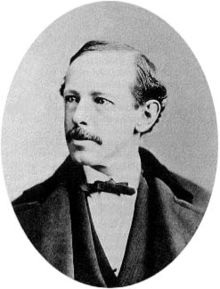
            Horatio Alger is a well known American author from the 19th century who is famous for his stories for young boys in which the protagonists rise from poverty to success—from rags to riches. The narrator mentions this man while he is in the chapel, saying the students often witnessed “the black rite of Horatio Alger” (111).
Barbee relays the story of the founder with much emotion and reverence. The founder taught himself and escaped his humble beginnings to a “place of learning” (119), where he “worked noontimes, nights, and mornings for the privilege of studying” (119). This is indicative of a Horatio Alger story because the founder came from a “great struggle beginning” (119) and rose up, through hard work, to be a self-made man. Barbee encourages the students to follow in the footsteps of the founder and work hard to become successful. 
Barbee compares the founder’s leadership to Moses’s when he says the founder led people “across the bottom of the blood-red sea” (120) shouting, “LET MY PEOPLE GO!” (120). This alludes to Moses leading his people out of Egypt and the grasp of PharaohEven the story of Moses can be seen as having aspects of a Horatio Alger story.  He was found floating down the Nile by Pharaoh’s daughter and was adopted into Pharaoh’s house. He became a great leader, freeing his people and bringing God’s laws to them.
It seems as though Barbee wants the students to look at the founder as the triumphant protagonist of a Horatio Alger story and a great leader like Moses. He also wants the students to follow in the founder's footsteps. He wants them to use their hard work to distance themselves from their beginnings. 
To read more about Horatio Alger and his writings, click here.