Friday, December 4, 2015

Blog Post #4 Chains

The themes of invisibility and succumbing to a higher power are a big part of this novel. The narrator wants to make a good impression on Mr. Norton. He drives him wherever he wants to go and gets him whiskey. He is even impressing Mr. Bledsoe. Although he is also black he is of power. Mr. Bledsoe normally is disgusted or avoiding white people. When Mr. Norton is hurt and maybe angered by the events, Mr. Bledsoe is doing whatever he can to be on his good side.
                This brings up an interesting idea of a chain of desires to impress. In The Kite Runner, Hassan always wants to do well in Amir’s eyes. He is constantly trying to satisfy Amir. Hassan does anything for Amir because he is the servant and he feels like he must impress him. When Amir grows up, he goes back to Afghanistan. He is not necessarily succumbing to the Taliban when he goes back, but there’s a certain element of fear. Amir must be careful as Afghanistan is dangerous. In order to get Sohrab he must surrender to an extent.

                There always seems to be a chain. There’s always somebody to give in to. Whether it be an actual higher power or just a higher social class, someone is taking advantage of someone else. Someone takes advantage of another and that person is below someone else. It’s inevitable and will always occur in life. This brings in an element of invisibility. If a person is always taking advantage of someone else, the higher power may not really see the lower person, but instead just see them as a person who will do anything for them—a shadow passing through. In some cases though the lower person may mean a lot to the higher power. Amir did not know this until it was too late.

Torn

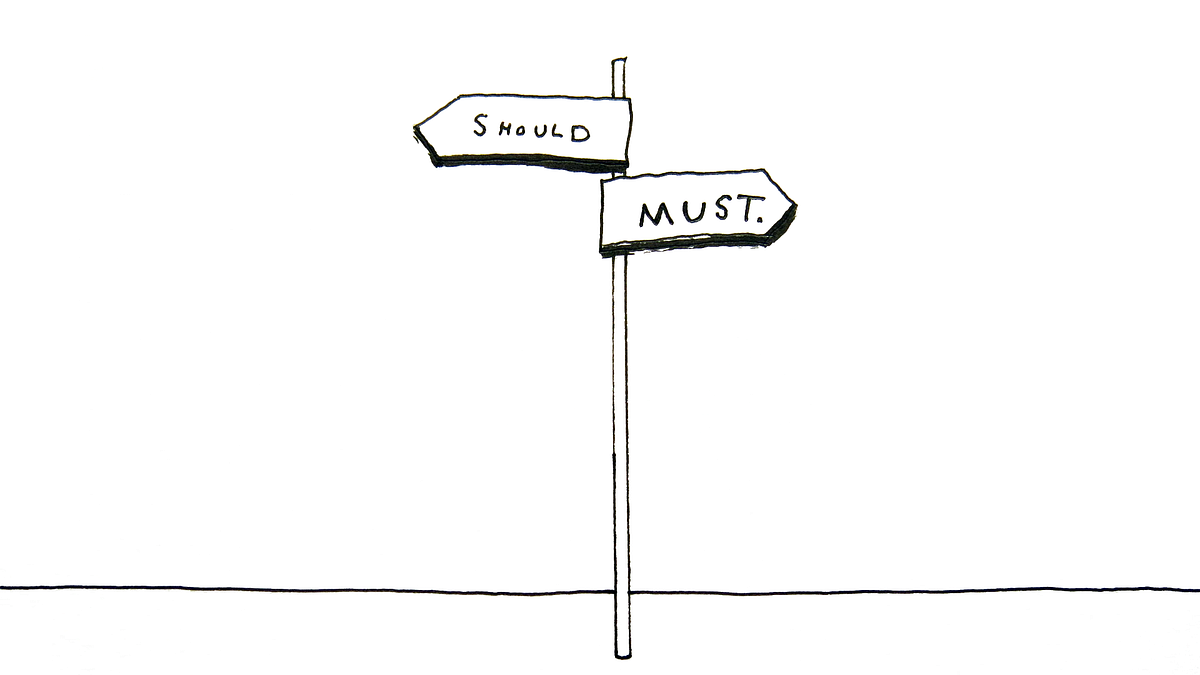
Throughout life, there's time that arise where one may have conflicting feelings or emotions and don't know which way to turn. During this particular story, the narrator face several self-conflicting situations which all come down to either benefiting himself as a black man as well as building an image that he is not susceptible to only what he is told to do by the white man or having a heightened respect for the whites and treating them as a higher form, putting himself in a secondary position. When the novel starts and his grandfather's words to "Live with your head in the lion's mouth." (16) and later Dr. Bledsoe's words to not obey every wish of the white man, and "...show them what we want them to see." (102) the narrator almost had that conscious debating whether he should follow his grandfather's wish or continue standing at the foot of each white man to gain a somewhat reciprocated form of respect. It's not just the narrator, however, his grandfather and Dr. Bledsoe both display the same display of catering to the white man. His grandfather admits "[He has] been a traitor [his] whole life..." (16) and the narrator questions Dr. Bledsoe's ideologies when he goes frantic over Mr. Norton continually apologizing and which the narrator deemed "...most confusing of all." (105) he wonders why he should stop putting himself at the "invisible" standard society views him and stop catering to the white man if that's the way he's moving around and getting somewhere. The college wants its students to move forward and be successful, but what if the only way is to get a good foot on the white side first?

Mr. Bledsoe The Vampire

Mr. Bledsoe once again is presented to the reader through his own internalized racism against black people. Once the narrator discovers his letters of recommendation are damnation rather than praise, an existential crisis occurs. “Twenty-five years seems to have lapsed between his handing me the letter and my grasping its message” (191). Ellison uses the letters of recommendation to put the nail in the narrator’s emotional coffin. The last shred of hope he has at being readmitted into college (and society as he knows it currently) dissolves. Ellison, through a system of hope and despair, has broken the narrator’s youthful innocence. Like in How to Read Literature like a Professor, Bledsoe acts as a vampire upon the narrator. He is a mysterious and lofty acquaintance. He takes great interest in the narrator’s youthful spirit. Spirit that Bledsoe drains, feeds on, and leaves to wither in the streets of Harlem. Bledsoe metaphorically feeds on the innocence of a young naïve man to gain power for himself. He is a vampire.


Ellison employs the young Mr. Emerson as an alternate avenue for life as a young black man. In the rehabilitation vantage point of this climax: Emerson is the sponsor, and the narrator is in need of a 12 step program on how to navigate life. “There is so much more you could do here…I do know the world you’re trying to contact” (188). Ellison uses the son of Mr. Emerson as the conduit messenger to the narrator to introduce a new generation. From this point on in the novel Ellison has introduced main characters who were much older. By adding a youthful white man into the menagerie, Ellison allows for more change to occur. In one small section, the narrator finds hope, loses it, and gains a new opportunity to turn his back on normal life (college) all together. 

Underlying Motives

When the narrator arrives in Harlem, he encounters brutal reality. Prior to leaving, Bledsoe tells him “instead of uplifting the race, [he has] torn it down” (140). The narrator enters Harlem with the hope that he will attain a job with his “hand of high trump cards” (163) provided generously by Bledsoe. He does not.
            Instead, the letters contain directions to make the narrator’s leave from the college “as [painless] as possible” (191). Bledsoe also tells the narrator before he leaves: “after you win the game, you take the prize and you keep it, protect it; there is nothing else you can do” (143). This philosophy ends up being the very thing that triggers a downward spiral in the narrator’s hopes. Bledsoe’s position is his prize and he protects it, sending the narrator away with the hope that returning to the school is possible. He has no intention of providing the narrator with further education.
            Bledsoe’s attitude toward the narrator shows a similarity to Iago’s treatment of Roderigo in Othello. Through his sealed letters, Bledsoe gives the narrator a false sense of hope, feigning concern for his success. Iago proves to be a maniacal character and feeds false hopes to Roderigo, like a possible future with Desdemona. Though Iago lies to nearly the entire cast of characters in Othello, he uses Roderigo as a means to an end, feigning concern for Roderigo’s desires. The narrator says everyone “seemed to have some plan for [him], and beneath that some more secret plan” (194). The same can be said for Iago and Roderigo. Unaware of deception and the falsity of their hope, both Roderigo and the narrator are manipulated by men who crave power.


Just like Iago telling Roderigo to "put money in thy purse" has underlying meanings and motives in Othello,
the letters Bledsoe gives to the narrator in Invisible Man are also not what they seem to be.


Full Circle

In the epilogue, our narrator takes the time to reflect on his life that he began in the Prologue- coming full circle. He begins in the hole and ends in the hole. He considers coming out of his hibernation. By being so secluded from the real world, he is able to find his true identity and purpose in life. He says, “Even an invisible man has a socially responsible role to play”. He has gone through many life changing experiences that have given him a new perspective on reality and himself. He decides that living in the world where people refuse to see you as a human being is worse than death itself. No matter what you do in the world, racism will always overpower.  Our narrator decides that writing down his story has allowed him to fight hatred and find it in himself to love again. He speaks for all of us because he understands his own experiences can be applied to all people. All humans go through some type of struggle. By coming full circle, it makes the narrator a dynamic character. 

https://www.youtube.com/watch?v=GibiNy4d4gc

Blog Post #4

From the beginning, it is clear that the Brotherhood cares about its appearance. The Chthonian hotel, where the Brotherhood meets, is an opulent building that has rooms “lined with books and decorated with old musical instruments” (300). Even the people dress nicely; Emma wore a dress smothered with “blazing diamonds” (300). This makes it seem as though the people in the Brotherhood are nothing but pretentious rich citizens. The money they spend on the hotel, fancy clothes, and drinks can go to more beneficial things like awareness for black equality or to help blacks get a higher education. Instead, they selfishly spend money for themselves. The hotel, the Chthonian, is named after the Greek Gods of the underworld. This allusion indicates that the Brotherhood may have a darker, more sinister side.
The Brotherhood makes the narrator erase his identity; the members give him another name, a relocated home, and some money to buy new clothes. The Brotherhood tries to rob the narrator of his individuality, and the narrator even says, “I [am] becoming someone else” (335). When the narrator makes a speech, it is a huge success because it motivates the audience. The Brotherhood committee, however, is enraged by the speech, claiming it was “wild, hysterical, politically irresponsible, and dangerous” (349). Now, the narrator must be “trained” (351) by Brother Hambro. The narrator can not comprehend what went wrong; his speech represents his true beliefs.Why would an organization that works to make “a better world for all people” (304) hinder the narrator from actually making a change? Clearly, the Brotherhood is corrupted.  

Willingness to overcome struggle

       The “Invisible Man” is structured around the recurring themes of overcoming stereotypes, prejudice, and self-identification. Whether it be fighting in the battle royal, the sambo doll, the coin bank, or living in a judgmental society, there is always an unremitting struggle to be noticed as a person rather than a thing for African Americans in the novel- especially the narrator. 

       Throughout the novel the narrator constantly jumps through hoops in order to fulfill the role of a ‘black man’ as described by important people such as his grandfather, Mr. Norton, and Mr. Bledsoe. In the beginning of the novel, the narrator states that his grandfather's dying words “became a constant puzzle which lay unanswered in the back of [his] mind.”(16) As the narrator attempts to complete the tasks assigned to him, however, he loses himself in the process. Perhaps the reason the narrator refers to himself as the ‘invisible man’ is because he is too busy trying to please others and be noticed by society that he does not truly know he is. How can one expect to know who they are if they never have the opportunity to think for themself? The coin bank that the narrator received emphasized how he is perceived in society, as a “slave” to white people. Moreover, the fact that the narrator smashed the coin bank did not diminish society's prejudice views.  
       
       The themes that Ellison relies on in the “Invisible Man” perfectly depicts the life of an African American linking in a prejudiced society. It is evident throughout the novel that trying to overcome prejudice, stereotypes, and self-identification has led the narrator to become an invisible man. Once the narrator feels comfortable in his environment and accepted by others, he will become an invisible man; the narrator might even refer to himself by his real name. 


In Roots, Kunta gets beat until he accepts the name the slave owners gave him,Toby. Similar to the narrator, “Toby” unwillingly surrendered and did what the slave owners said; he also lost realization of himself in the process.